Laser safety, an essential aspect of laser welding
Safety
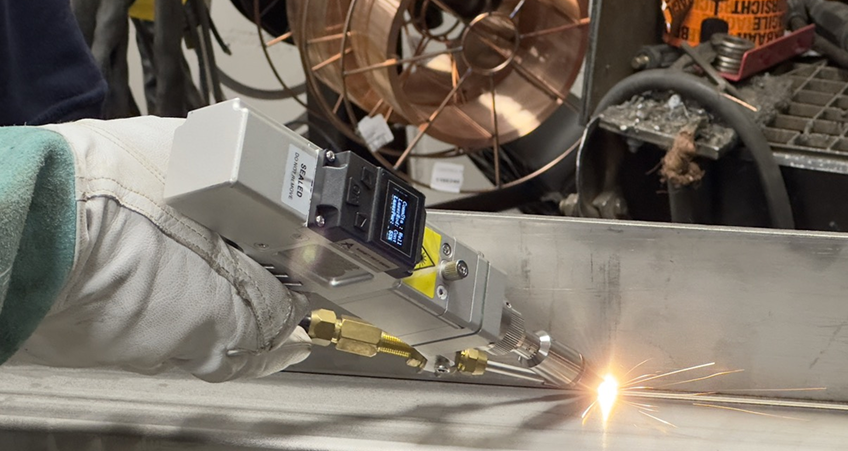
Why safety is crucial for your projects
At LAZRZ.com, we understand that combining high-power lasers with precision welding makes it possible to create incredibly accurate and strong joints. However, like any advanced technology, laser welding comes with its own set of challenges — and safety is at the top of that list. In this article, we explore the importance of laser welding safety and why it should be a priority for everyone in the industry.

Protect yourself against invisible IR radiation
During laser welding, a large amount of invisible infrared radiation is generated. Because the laser must always be in contact with the workpiece, protection focuses on the potentially harmful effects of reflected radiation. Proper eye protection is therefore extremely important. Always use a laser welding helmet, safety goggles, or face shield that provides protection against the wavelength of the laser. The skin must also be protected by wearing suitable protective clothing.

Work in a shielded area
Due to the high intensity of the laser, reflected radiation can also be harmful to the eyes at greater distances. It is therefore essential that the laser is not used in the vicinity of colleagues who are not wearing laser safety goggles. Shielding the welding process from colleagues ensures that no risk is posed to others.

Use the correct PPE
A laser welding machine emits light with a wavelength in the infrared spectrum. Traditional welding helmets do not provide protection against this wavelength. Using the correct eye protection is essential when laser welding.

Training & knowledge
Having well-trained operators is perhaps the most important safety measure. Knowledge of the equipment, materials, and best practices ensures that the risks associated with laser welding are kept to a minimum.
Why choose LAZRZ.com?
At LAZRZ.com, safety is a top priority. Our equipment meets the highest safety standards, and we provide extensive training and support to ensure your laser welding operators work safely and efficiently. If you want to unlock the full potential of laser welding without compromising on safety, we are the partner you can rely on. Join the many satisfied customers who have chosen quality, precision — and above all — safety with LAZRZ.com.
Shop our personal protective equipment here
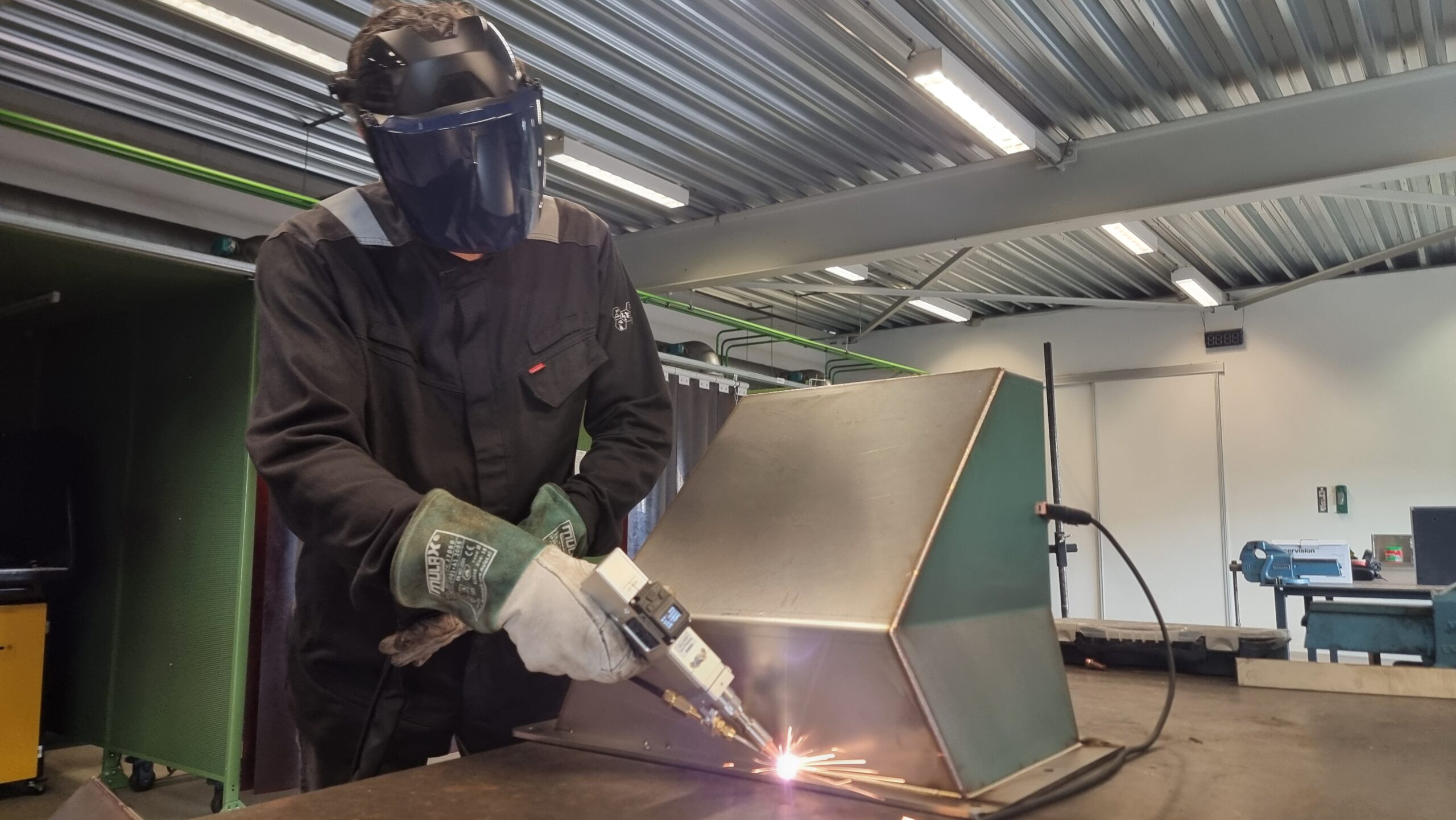
Laser safety in laser welding and laser cleaning
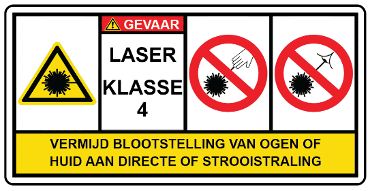
Laser welding offers high precision and efficiency but requires strict safety measures. According to EN 60825-1:2014, lasers are classified with corresponding safety requirements. Laser welding and laser cleaning systems fall under Class 4 — the highest risk category. These lasers, typically operating between 1000 and 2000 watts, are powerful enough to ignite materials or cause severe injuries. However, with the right equipment, protective measures, and procedures, working safely is entirely achievable.
Characteristics of laser light
The laser light used in handheld laser welding is part of the invisible infrared spectrum (IR-A). This means that both the direct laser beam and its reflections cannot be seen. The direct beam and specular reflections have limited divergence, which means the intensity can remain dangerous even over longer distances. Therefore, when aiming for a high level of laser safety, it is essential to also consider diffuse reflections.
Risks of laser light
The laser light produced during laser welding and laser cleaning is harmful to both the skin and eyes. Because the eyes cannot detect invisible infrared light, the natural reflex to close or look away—triggered by bright visible light—does not occur.
Risks to the skin
Direct laser radiation can cause burns to the skin. With a hand-held laser, this risk is limited because the welding gun must be in contact with the workpiece. When this contact is interrupted, the laser will stop. Brief contact of the laser beam with the skin may result in a minor burn.
Risks to the eyes
The infrared laser radiation used in laser welding is harmful to the eyes. Because infrared light can cause permanent eye damage, wearing proper laser safety goggles is essential. The laser safety goggles in our range offer a very high level of protection and ensure that the eyes are well protected.
Want to experience the benefits of laser welding yourself? Sign up for a demo!

Occupational hygiene strategy
When reducing risks in workplaces where hazardous substances or processes are involved, the occupational hygiene strategy offers an effective approach. This method can also be applied to create a safe working environment for laser welding. By implementing technical measures, using safe work processes and suitable materials, and applying collective or organisational controls, risks can be significantly reduced. When hazards cannot be fully eliminated, it is essential that workers have the appropriate personal protective equipment.
Safe laser equipment
Laser equipment must comply with various European standards and directives—just like any other machinery—including the Machinery Directive and the Low Voltage Directive. For systems that incorporate laser technology, the EN 60825-1:2014 standard also applies. This standard defines laser classifications and the corresponding safety requirements. For Class 4 systems, this includes mandatory features such as: Fail-safe control systems Key-switch activation Fail-safe interlock protection Clear and compliant warning labels Fail-safe visual warning indicators These integrated safety features ensure that the equipment can be operated responsibly and in accordance with regulatory requirements.
Shielding

Laser safety knowledge and expertise
Personal protection
Laser safety glasses
Laser safety clothing and gloves
Do you have any questions regarding safety and the measures that can be taken to reduce risks?
Please contact us, we’ll be happy to explain.